
Shared ownership
Giving communities a stake in commercial renewable energy projects
Shared ownership is when communities get to own a proportion of a commercial renewable energy development. It delivers a real stake and much better benefits to the community than the Community Benefits that developers are recommended to pay host communities. It is built into government policy and the remit of GB Energy, in the Local Power Plan.
It is a huge opportunity to expand the sector by between 3 and 10 times. Grid connection queues in England are effectively full (except for onshore wind) so we need to be part of projects that are already in them.
This page will collect information in one place as it emerges.
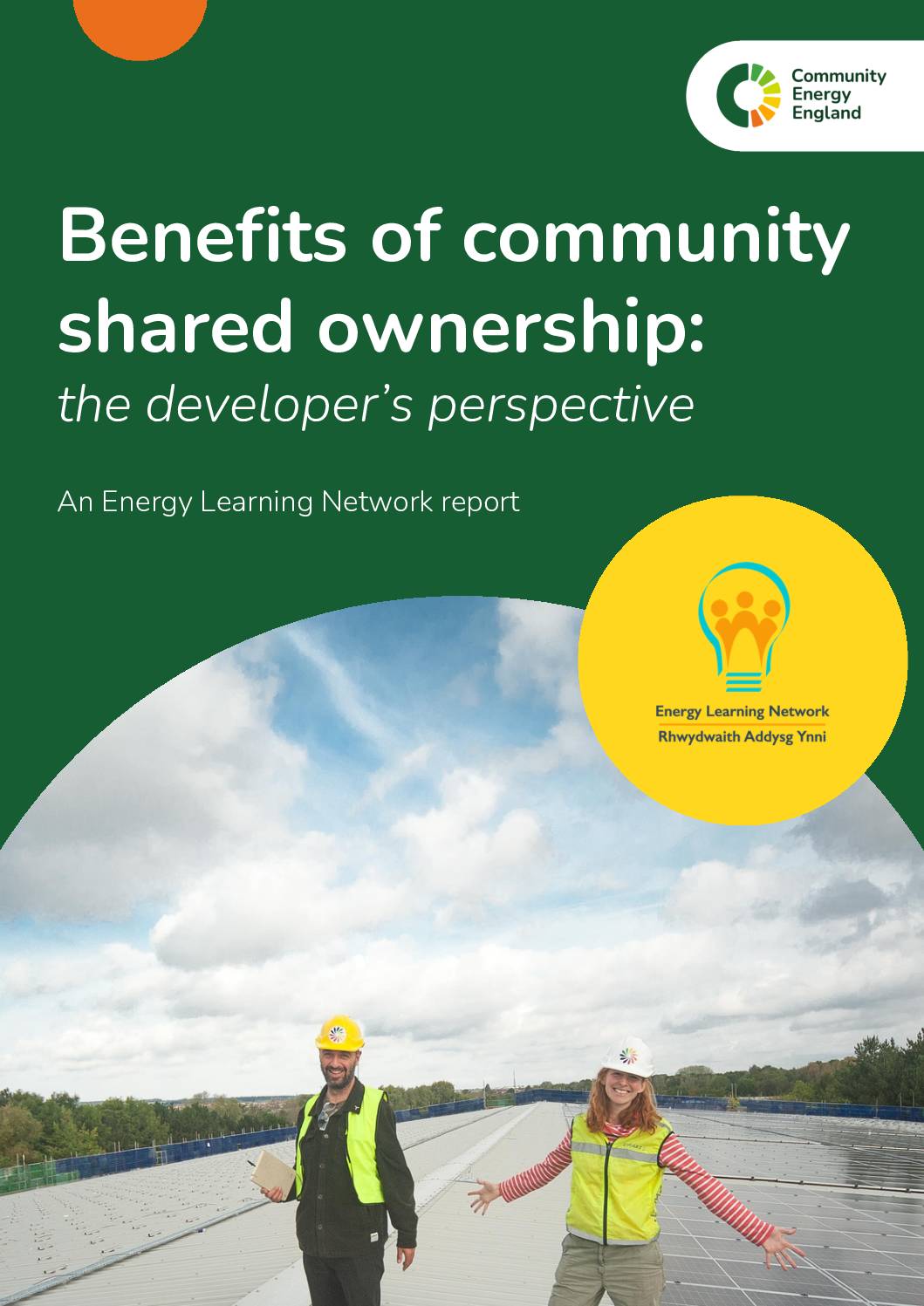
Benefits of community shared ownership: the developer’s perspective
Download (PDF, 8.4MB) Benefits of community shared ownership: the developer’s perspective
An Energy Learning Network report on the benefits of community shared ownership for renewable energy developers, drawing on interviews with developers, funders and community energy organisations.
To find out more, join our Energy Learning Network webinar, Shared ownership: how to boost community ownership of clean energy, on 5 November, 12:00–13:30.
You will hear expert advice from community energy organisations who have done it before, GB Energy, a developer, and CEE.
Imminent consultation
In the summer, the government will be launching a consultation on whether and how to mandate that developers offer a proportion of their projects for community ownership. In the light of the importance of this opportunity CEE will be encouraging and enabling members to respond. CEE and many members responded to an earlier call for evidence on Shared Ownership and Community Benefits on which this builds. This will result in secondary legislation being brought forward in 2027 to enact the provision in the Infrastructure Act (2015) for a Right for communities to own a proportion of on and offshore renewable energy developments.
Briefings
For practical advice on doing Shared Ownership in your community see the notes from our Shared Ownership Workshop at CEE’s Summer Conference in July 2026. The message was ‘it is complex’: get expert advice from community energy organisations who have done it before.
For background see our joint briefing on Shared Ownership which explains why targets and guidelines have never worked in the past. Denmark mandates a 20% offer – 52% of onshore wind in Denmark is community owned. In the Netherlands they mandate a 50% offer. It should be read alongside our other joint briefing on Benefits for Developers of engaging in community energy.
The Coalition government, which also created the Community Energy Strategy, convened a Shared Ownership Taskforce. Its Shared Ownership Taskforce report and recommendations prompted a government response and the Community Electricity Right enshrined in the Infrastructure Act 2015. But the ensuing Conservative government neglected to take it forward and effectively banned onshore wind where it would have been most useful.
How can we access shared ownership?
Shared ownership targets and guidelines are in place in Wales and Scotland and a number of projects have been developed. It was happening in England before the onshore wind ban and is happening again. There are about 6 developers engaged in mostly smaller shared ownership projects in England. CEE is surveying them seeking to learn from their experiences – both advantages and challenges of doing it.
Shared ownership is complicated! Advice from experts we convened at our summer conference in 2026 was “don’t go it alone”. There are organisations and people who have done it before – work with them. We will gather and link from here the various offers of our members and partners.
GBE will launch a Shared Ownership Loan Fund later this year and has already commissioned template legal documents for communities to use. GBE plans to take an early stake in renewable energy developments on behalf of the community which can buy out a share later at a reasonable rate.
Contact
Duncan at [email protected]